By the Sevetu team
On this page
Short answer
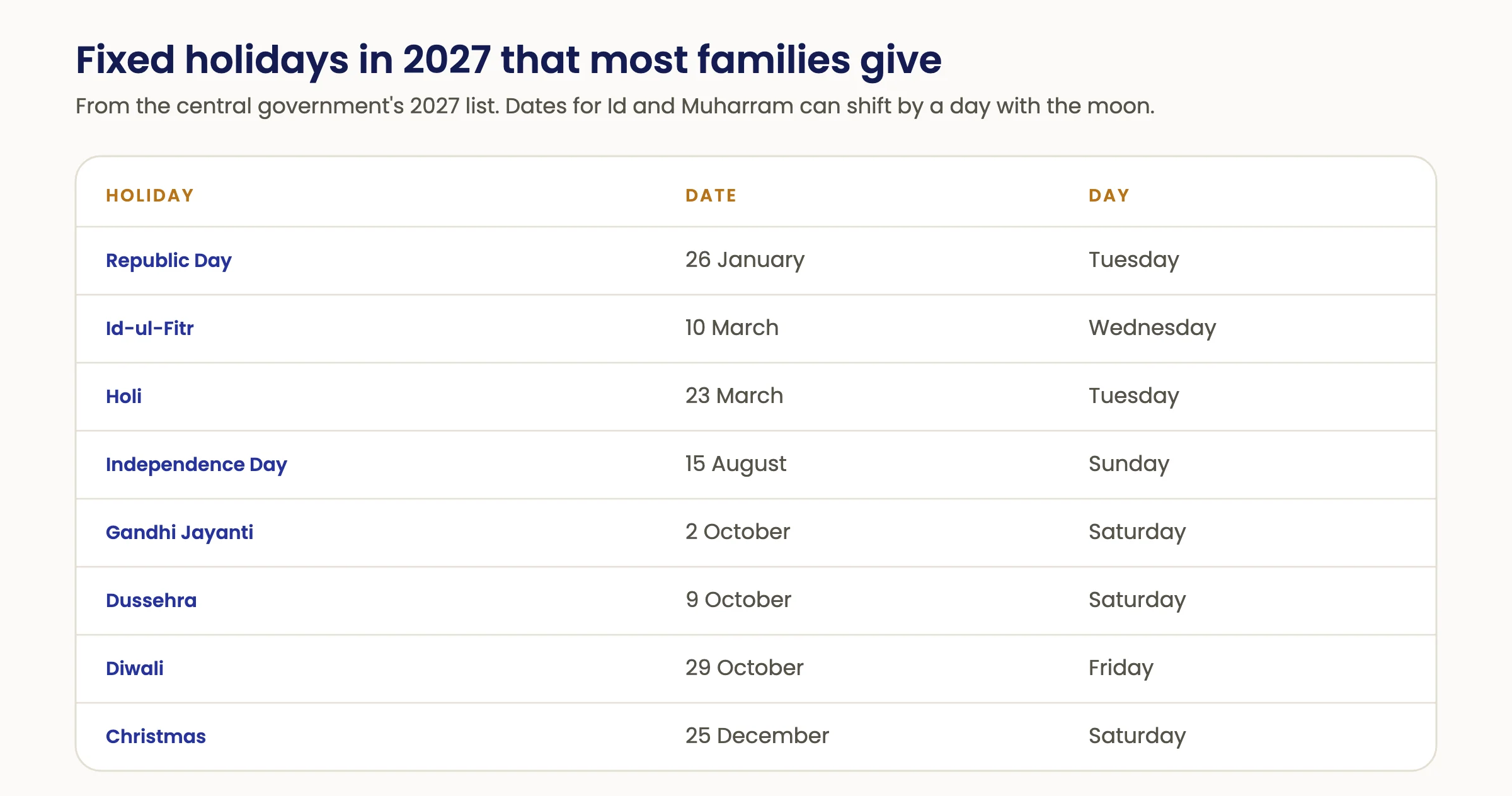
Give a fixed weekly off of at least a full day, the festivals she celebrates (agreed by name), and annual leave to visit home, with notice both ways. For 2027, the central government's list puts Holi on 23 March, Id-ul-Fitr on 10 March, Diwali on 29 October and Christmas on 25 December1. Write the rules into the agreement.

The 2027 dates
The Department of Personnel and Training's list for 2027, for central government offices in Delhi, has 17 holidays1:
| Holiday | 2027 date | Day |
|---|---|---|
| Republic Day | 26 January | Tuesday |
| Id-ul-Fitr | 10 March | Wednesday |
| Holi | 23 March | Tuesday |
| Good Friday | 26 March | Friday |
| Ram Navami | 15 April | Thursday |
| Mahavir Jayanti | 19 April | Monday |
| Id-ul-Zuha (Bakrid) | 17 May | Monday |
| Buddha Purnima | 20 May | Thursday |
| Muharram | 16 June | Wednesday |
| Independence Day, and Id-e-Milad | 15 August | Sunday |
| Janmashtami | 25 August | Wednesday |
| Gandhi Jayanti | 2 October | Saturday |
| Dussehra | 9 October | Saturday |
| Diwali | 29 October | Friday |
| Guru Nanak's Birthday | 14 November | Sunday |
| Christmas | 25 December | Saturday |
The list notes that the dates for the Id festivals and Muharram may change with the moon1. Regional festivals such as Pongal, Onam, Ugadi, Gudi Padwa, Bihu, Chhath and Karva Chauth are chosen state by state1.
This is a government office list, not a rule for your home. Use it for the dates. The days off are something you and she agree.

Weekly off: a day, not a favour
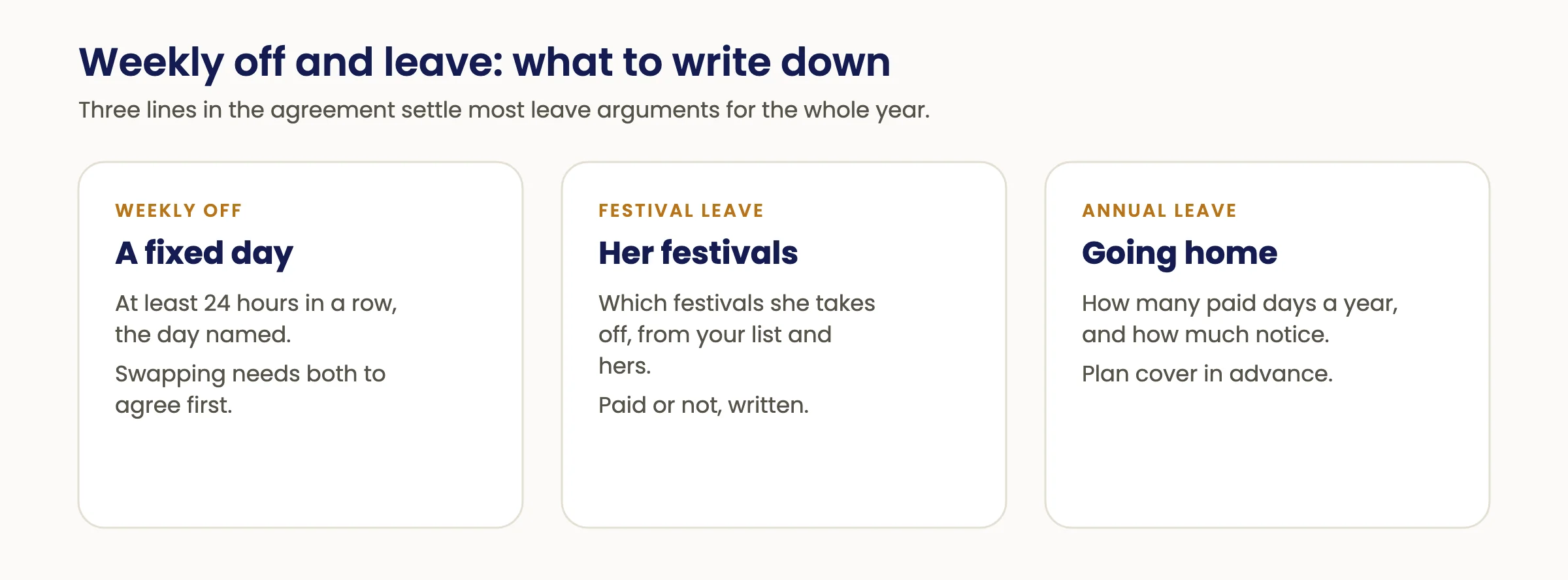
The ILO's Domestic Workers Convention says weekly rest "shall be at least 24 consecutive hours"2. India hasn't ratified it, but it's a fair benchmark. Name the day in the agreement. If you need to swap it, agree first; don't just ask on the morning.
Our take: a weekly off isn't a favour. Writing the day into the agreement means nobody has to ask for it.
Festival leave: hers, not just yours
A cook from Odisha may want Raja and Durga Puja; a maid from Bihar, Chhath; a driver from Punjab, Lohri and Gurpurab. Ask her which festivals she takes off, agree the list together, and say whether those days are paid.
Many workers travel home for Diwali and Chhath and come back a week or two later. Plan cover in advance. Post a short job for cover →
Annual leave: going home
Agree how many paid days a year she gets to go home, and how much notice each side gives. There's no fixed number. Our work agreement guide uses 12 paid days with 15 days' notice as an example; agree what works for you both.
Nobody has ever won the "was Sunday off agreed?" argument. Both sides just remember louder.
Write it down
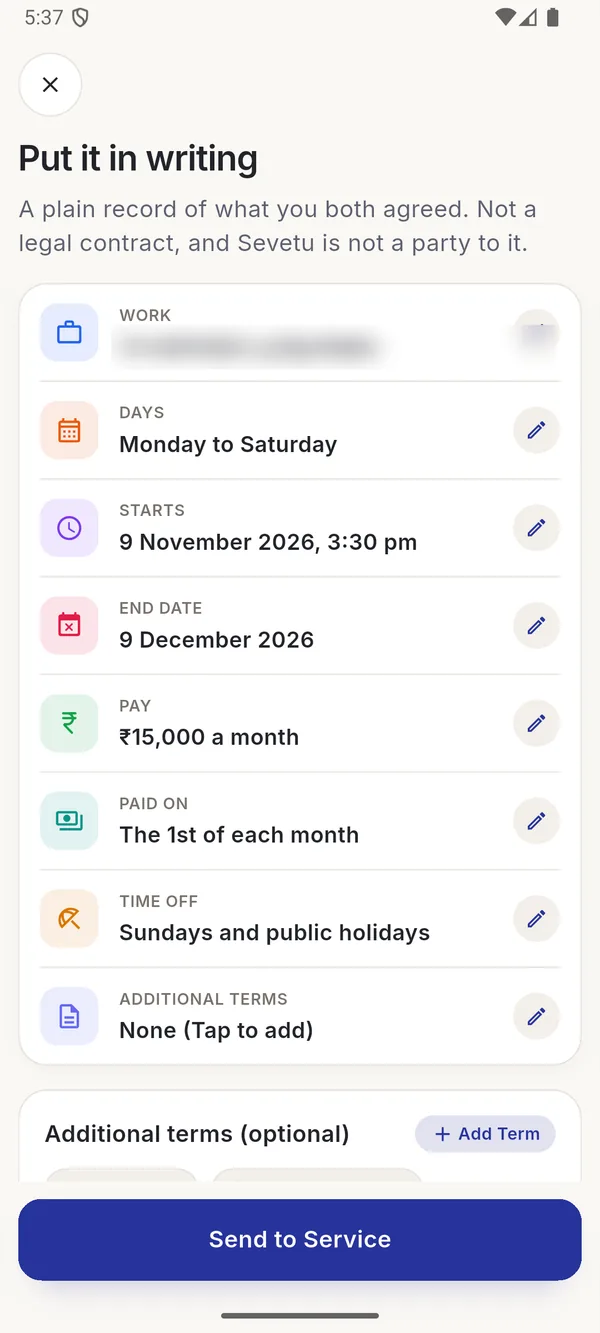
On Sevetu, the agreement records the working days and time off. Add the festival list and annual leave as additional terms. The ten lines every agreement needs →
Read next: Diwali bonus for house help · live-in or part-time, compared · maid salary in 2027
Questions people ask
There's no single legal number for private households. Most families give a weekly off, her main festivals and some paid annual leave to go home. Agree it and write it down.
The ILO's domestic workers convention asks for at least 24 consecutive hours of weekly rest. India hasn't ratified it, but a full weekly off, named in the agreement, is fair practice.
The central government's 2027 holiday list puts Diwali on Friday, 29 October 2027.
Agree it in advance. Many families pay for the main festivals and a weekly off. Write down which days are paid.
Agree a number of paid days to go home each year, with notice both ways. There's no fixed legal number for private households.
Sources
- Department of Personnel and Training, Government of India, Office Memorandum F. No. 12/2/2023-JCA, 16 July 2026, Holidays to be observed in Central Government Offices during the year 2027, as forwarded by the Department of Posts, read 12 November 2026: Annexure-I lists 17 holidays for Delhi/New Delhi including Republic Day 26 January, Id-ul-Fitr 10 March, Holi 23 March, Diwali 29 October and Christmas 25 December; dates for Id-ul-Fitr, Id-ul-Zuha, Muharram and Id-e-Milad may change with moon sighting; regional festivals are chosen by state coordination committees. utilities.cept.gov.in (PDF)
- International Labour Organization, Domestic Workers Convention, 2011 (No. 189), Article 10.2: "Weekly rest shall be at least 24 consecutive hours." Binding only on members that ratify it. normlex.ilo.org
Add Sevetu as a preferred source on Google → Our guides then show up more often in your Top Stories and AI answers.

Written by the Sevetu teamSevetu is a hiring marketplace for household work in India, operated by Fiel Private Limited. These guides come from the questions families and workers ask us. Nothing here is sponsored, and where a number has no defensible source we say so instead of inventing one. About Sevetu