By the Sevetu team
On this page
Short answer
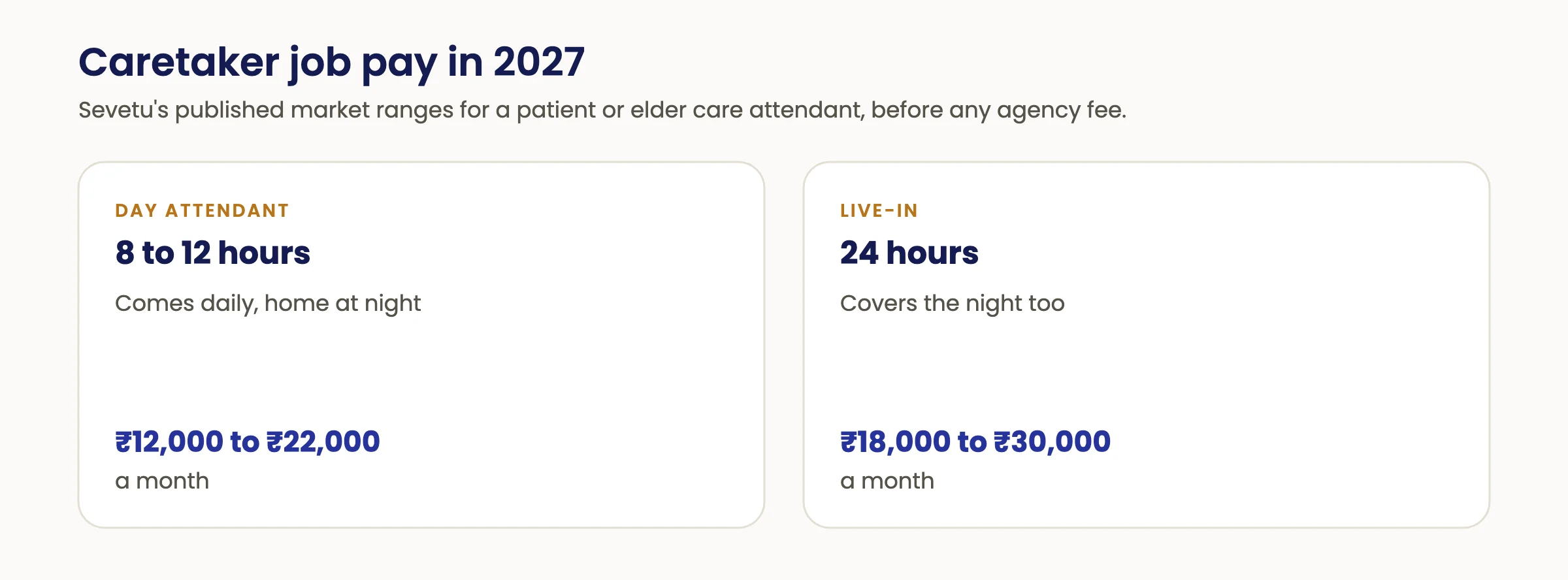
Home caretaker jobs pay ₹12,000 to ₹22,000 a month for a day attendant and ₹18,000 to ₹30,000 live-in on Sevetu's published ranges1. You can start without a certificate; a free GDA or geriatric caregiver course under PMKVY helps you get the better-paid jobs2. Apply directly to families on an app where they post jobs, and never pay to apply.

What the job is
Daily care for an elderly or ill person at home: bathing, changing, helping them move and turn, meals, making sure medicines are taken as the doctor wrote, and company. Families hire after surgery, a stroke, for a bedridden parent, or for a parent living alone.
What isn't your job: injections, wound dressing after surgery, deciding on medicines, catheters. Those belong to a nurse or doctor. Saying so clearly makes families trust you more, not less. What an attendant does and what needs a nurse →

Training that pays more, free
The government's skill councils run courses for this work2:
- General Duty Aide (GDA): patient care, the most asked-for certificate.
- Geriatric Caregiver: care for elders, at home or in homes.
- Home Health Aide: care at home, old age homes and hospices.
Under PMKVY, training and certification are free for eligible people, and RPL certifies years of experience you already have, in a short programme2. Find a free course near you →
Where to find caretaker work
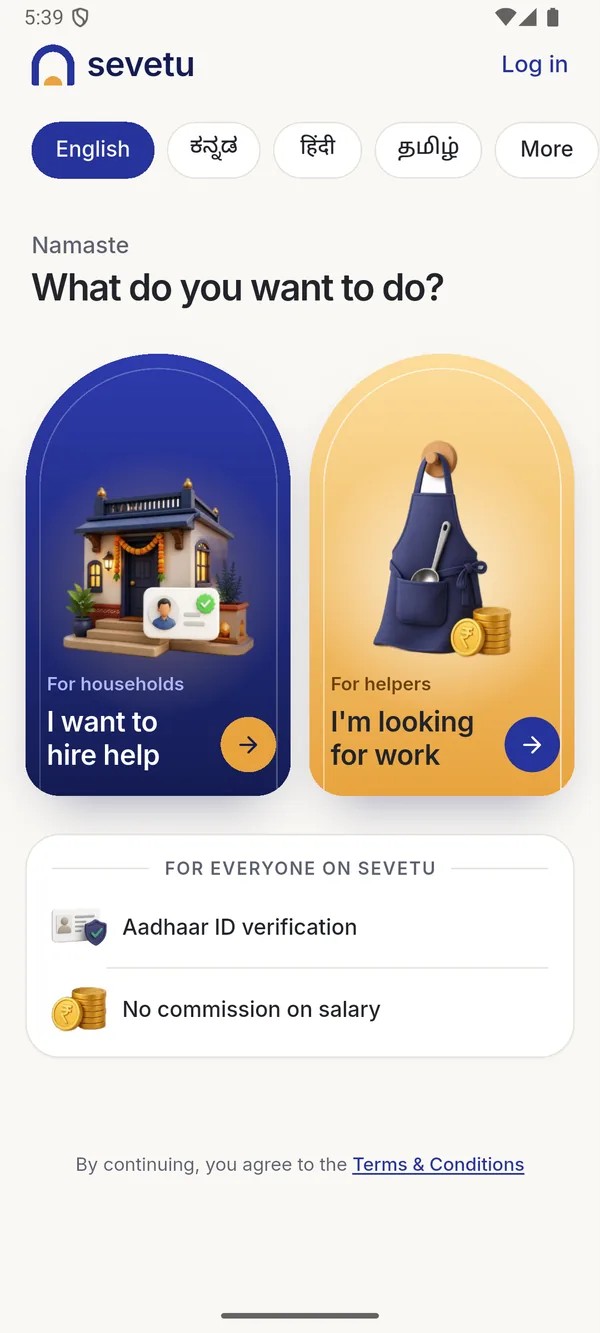
- Apps where families post jobs, such as Sevetu: free to join and apply, no commission on your pay3.
- Nursing and care agencies: they place attendants and often take a cut. Ask how much, from whom, and for how long.
- Hospitals: some families ask the hospital at discharge. Tell the nurses on the ward you're available.
Before you start with a family
Agree in writing: pay and pay date, day or live-in, hours and night duty, real rest hours, a weekly off, what tasks are yours and what needs a nurse, and notice. For live-in, your own room and meals.
Our take: a live-in caretaking job without real rest hours burns people out in weeks. Ask for them in writing; good families agree.
Read next: nanny, japa or caretaker: which to train for
Questions people ask
On Sevetu's published ranges, ₹12,000 to ₹22,000 a month for a day attendant and ₹18,000 to ₹30,000 live-in.
No, but it helps you get better-paid jobs. GDA and geriatric caregiver training are free under PMKVY for eligible people.
No. Injections, wound care and medicine decisions belong to a nurse or doctor. An attendant does personal care, mobility, meals and company.
On apps where families post jobs, such as Sevetu, through care agencies, or by telling hospital ward nurses you're available. Never pay to apply.
Sources
- Sevetu, A patient caretaker at home, read 12 November 2026: "₹12,000 to ₹22,000 a month for a day attendant and ₹18,000 to ₹30,000 live-in, with bedridden care, lifts and night duty at the top". sevetu.com
- Sevetu, GDA course, nanny and japa training: do you need one, and where to get it free, read 12 November 2026, citing the Healthcare Sector Skill Council and Skill India Digital: GDA, Geriatric Caregiver and Home Health Aide qualifications; under PMKVY, training and RPL are "provided free of cost to eligible candidates". sevetu.com
- Sevetu, Pricing, read 10 November 2026: for workers, joining and applying are free; no commission. sevetu.com/pricing/
Add Sevetu as a preferred source on Google → Our guides then show up more often in your Top Stories and AI answers.

Written by the Sevetu teamSevetu is a hiring marketplace for household work in India, operated by Fiel Private Limited. These guides come from the questions families and workers ask us. Nothing here is sponsored, and where a number has no defensible source we say so instead of inventing one. About Sevetu